
Companies Can Learn From the Indie Hacker Movement
A niche subculture of software developers is quietly rewriting the rules for building products.


What is Indie Hacking?
Indie hackers are individuals or small groups who build and launch products independently without the infrastructure, money, or resources of a company. They seem like startup founders, except they purposefully emphasize not raising outside money or building huge companies, instead, they want to bootstrap the business and fund lifestyles.
The movement gained popularity in 2018 from a few viral Twitter threads (remember when those were a thing?) and became a feasible option for many people during COVID-19 with the rise of remote work. The trend directly coincides with the rise of ‘digital nomads’.
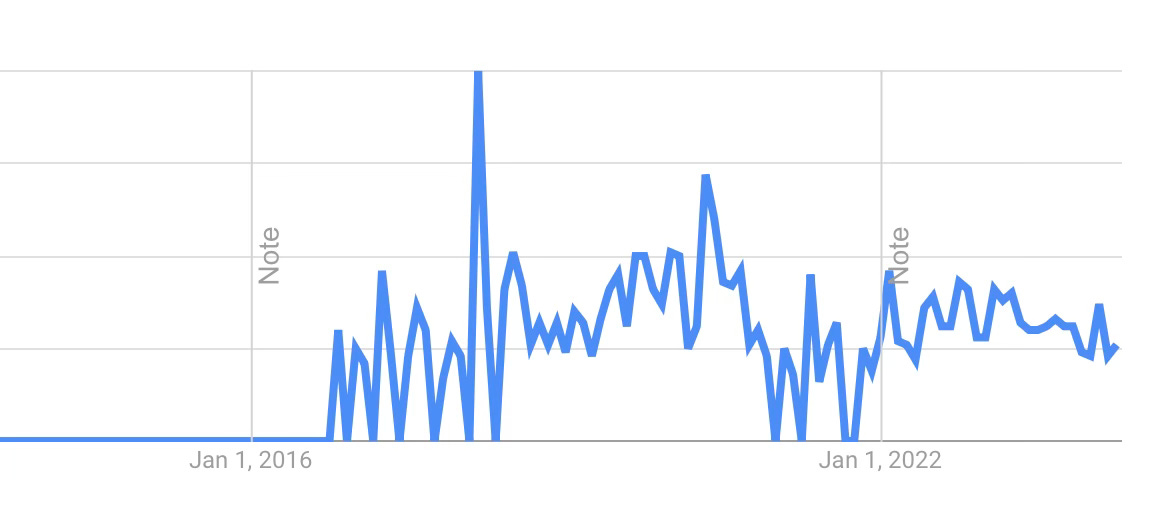
The indie hacking movement is thriving and visible in a few places: IndieHackers, Hacker News, r/indiehackers, NoCodeFounders, and X.
These are some interesting indie hacker companies:
*both were made by Pieter Levels who helped bring the indie hacker movement mainstream.
Many of these companies can grow to sustain a single founder or a few founders comfortably but most do fail (like all new companies). With those caveats, some principles can be borrowed for use in larger companies.
Rules of Survival
Building a company with almost no money and limited labor means you need to do things differently. Having no money feels like a constraint but is a forcing function to prioritize time and resources:
You need to build and launch very fast. Spending 8-12 months in development means the project usually dies. What can you get out the door in 4-6 weeks?
You’re building simple products that solve direct problems, not entire platforms (yet). This can mean starting with a landing page and basic spreadsheets.
You can always automate later. You should first create the product, prove the demand, and then figure out how to automate the operations.
Your product has to be immediately useful or interesting because you can’t blanket the market in advertising spend.
subpoint - Indie hackers often rely on communities for ideas, feedback, and word-of-mouth marketing. This could mean subreddits, ProductHunt, HackerNews, or other communities. Ex: talk to and get to know users directly.
Profit is everything and it matters immediately. There are no VC dollars to burn. Scaling negative margins means the business dies. This is tricky for a lot of new AI-reliant companies but more on that later.**
Never gamble much on a single idea or angle. Take small, quick bets. Think of them more as low-cost experiments to validate demand.
Use the simplest tool for the job. You don’t need the latest frameworks, perfect testing, or beautiful code to launch.
subpoint - Now that no-code tools are so accessible, the bar is much lower than ever before. Use as many APIs as possible. Simplify the design as much as possible. If you can hack together something over a weekend, even better. Plenty of AI tools can write starting code. The goal is speed, not perfection.
These rules are pretty contrary to how most companies build products and make decisions. A typical software company may do months of in-depth market research, spend serious cash on perfecting UI/UX, aim to build with zero bugs or defects at launch, and saturate the market with advertising spend. Processes like this take months and can be very expensive for an unproven product.
Borrowing from these principles will require some stakeholder investment and expectation setting. Still, it can be a long-term highly efficient use of resources, especially in a high cost of capital environment.
Caveat for some areas: some areas are probably bad or at least risky for ‘hacking together’ a solution. Medical technology, cybersecurity, finance, or anything heavily regulated. However, you can still move quickly in many of these areas to prove demand for an idea.
**Caveat for AI: AI is a pretty costly technology to implement, even when using an API layer. The unit economics can be tough to scale given the unpredictable pricing and platform risks. This is an area where more cash can help.